Building (and shutting down) Emaily
Emaily
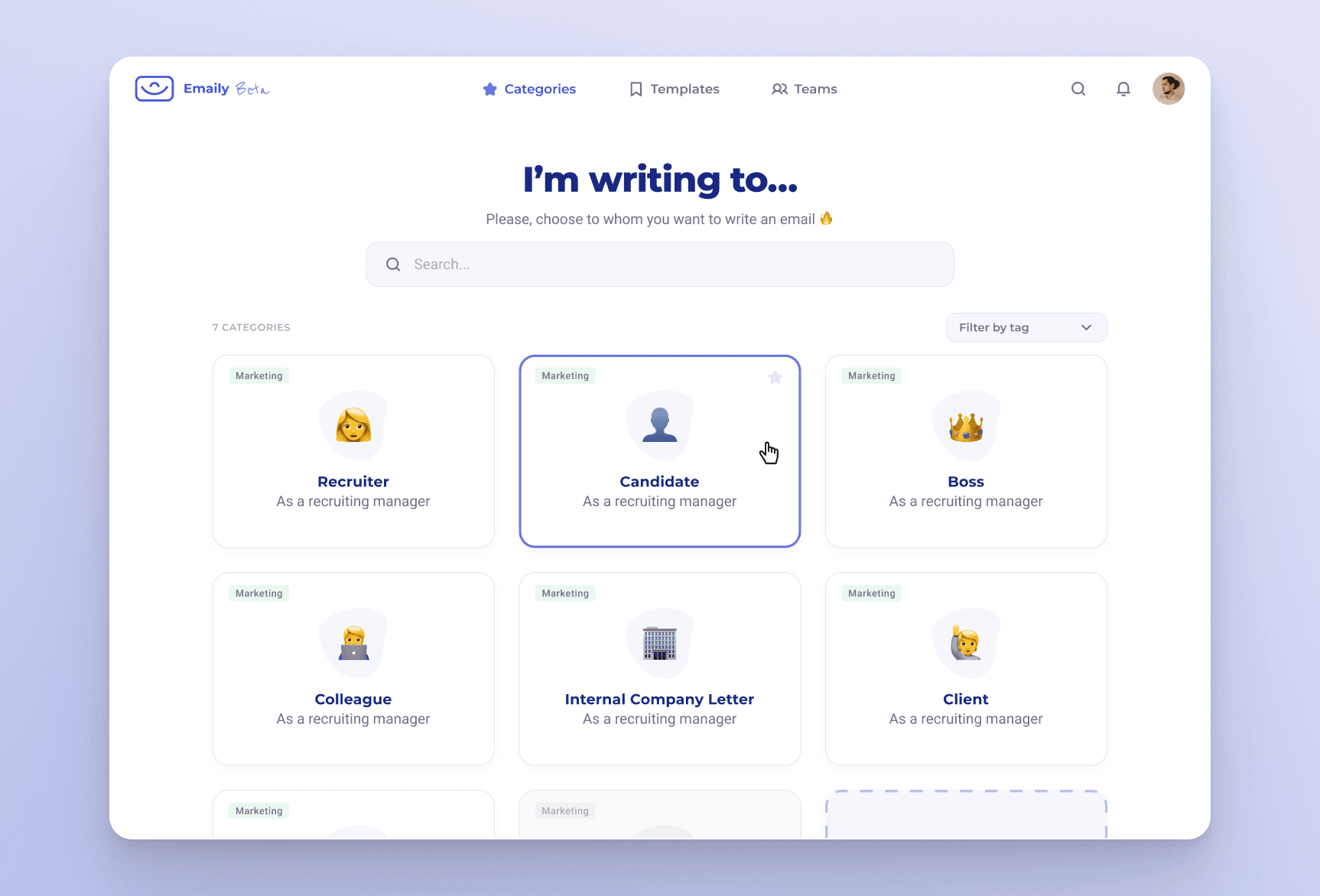
I created a startup called Emaily — a service that generates text for emails and messages for all life situations. Don't know how to ask for a salary increase? What words to choose to fire someone? Emaily will help with everything.
Here, I tell a short story of my mistakes.
Role
Founder \ Product
Team
1 backend, 2 frontend
Date
2021-2022
Situation
Fall 2021.
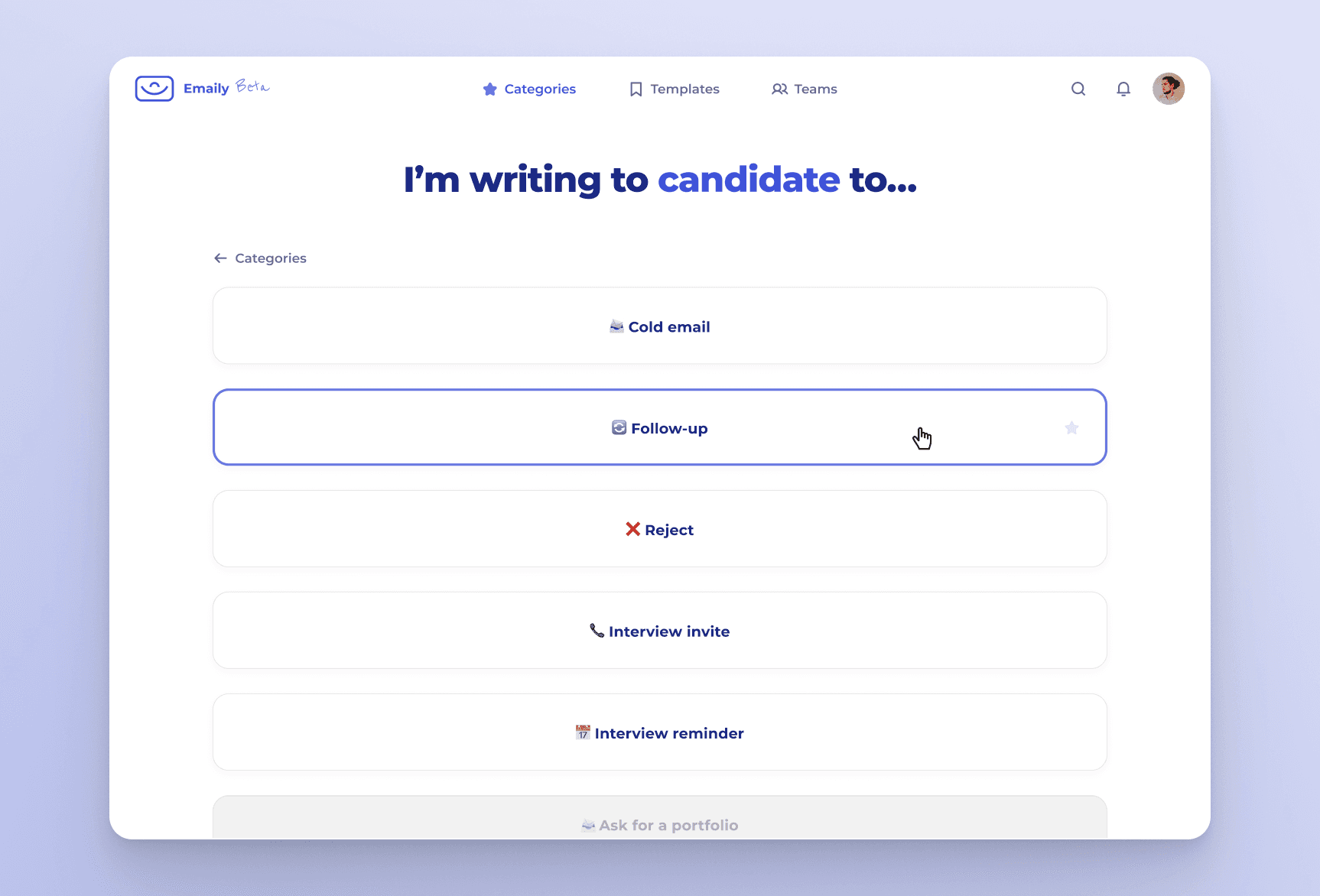
While working on a project in the recruiting industry, I noticed a big problem: candidates were not hearing back from recruiters or companies they applied to. This was harming the company's reputation in the eyes of the candidates.
To solve this problem, I came up with a feature that would allow recruiters to quickly generate individual response letters for each of the hundreds of candidates who applied. Unfortunately, other parts of the project were deemed more important, and this feature wasn't developed. But I liked the idea so much that I decided to work on it more myself.
Task
As a result, I had an interesting idea, but I didn't know if anyone needed it. That's why I decided to create a landing page, drive traffic there, and see the conversion of people who would leave their email to get early access. And based on the results, I'll decide whether to develop this idea further.
Process
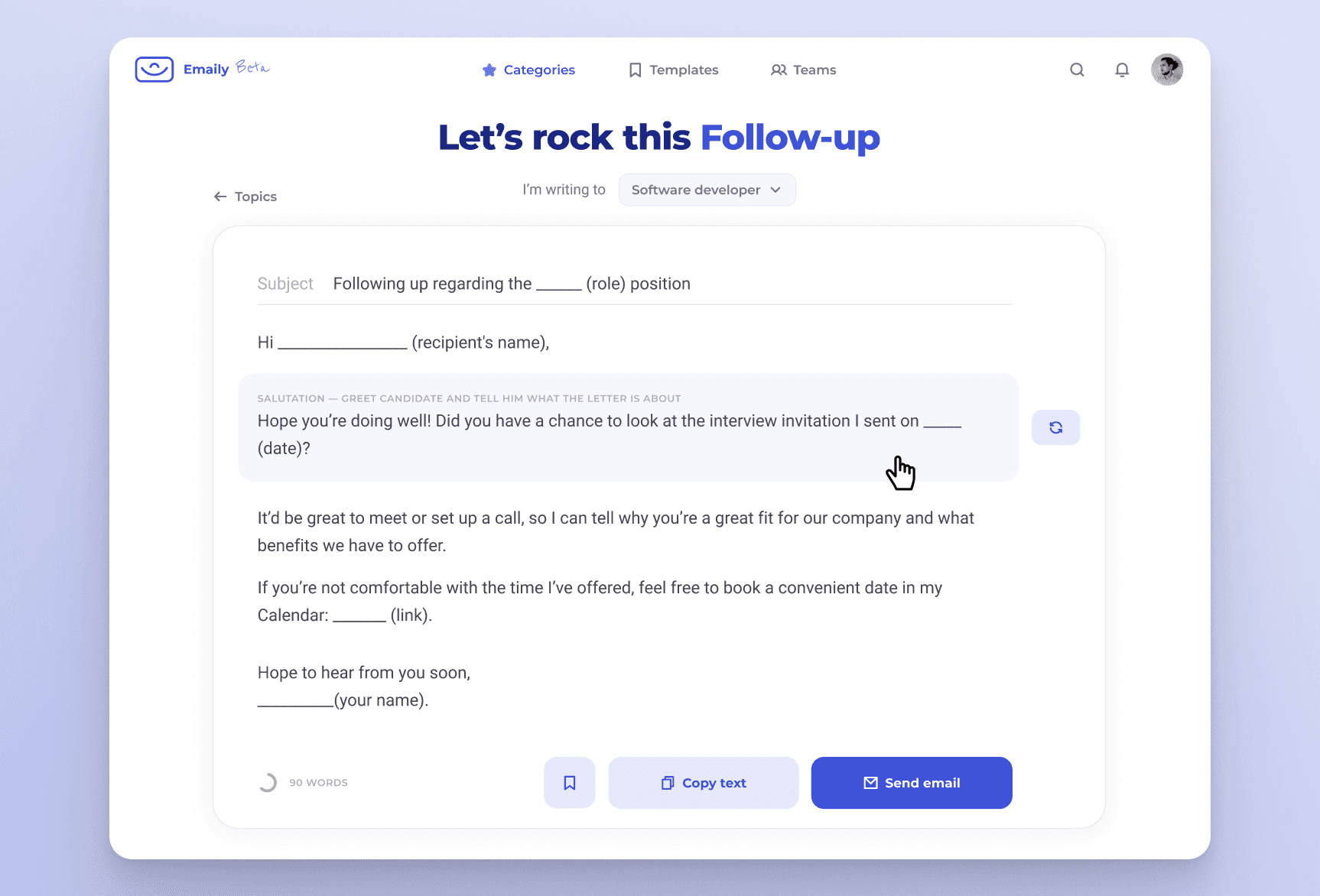
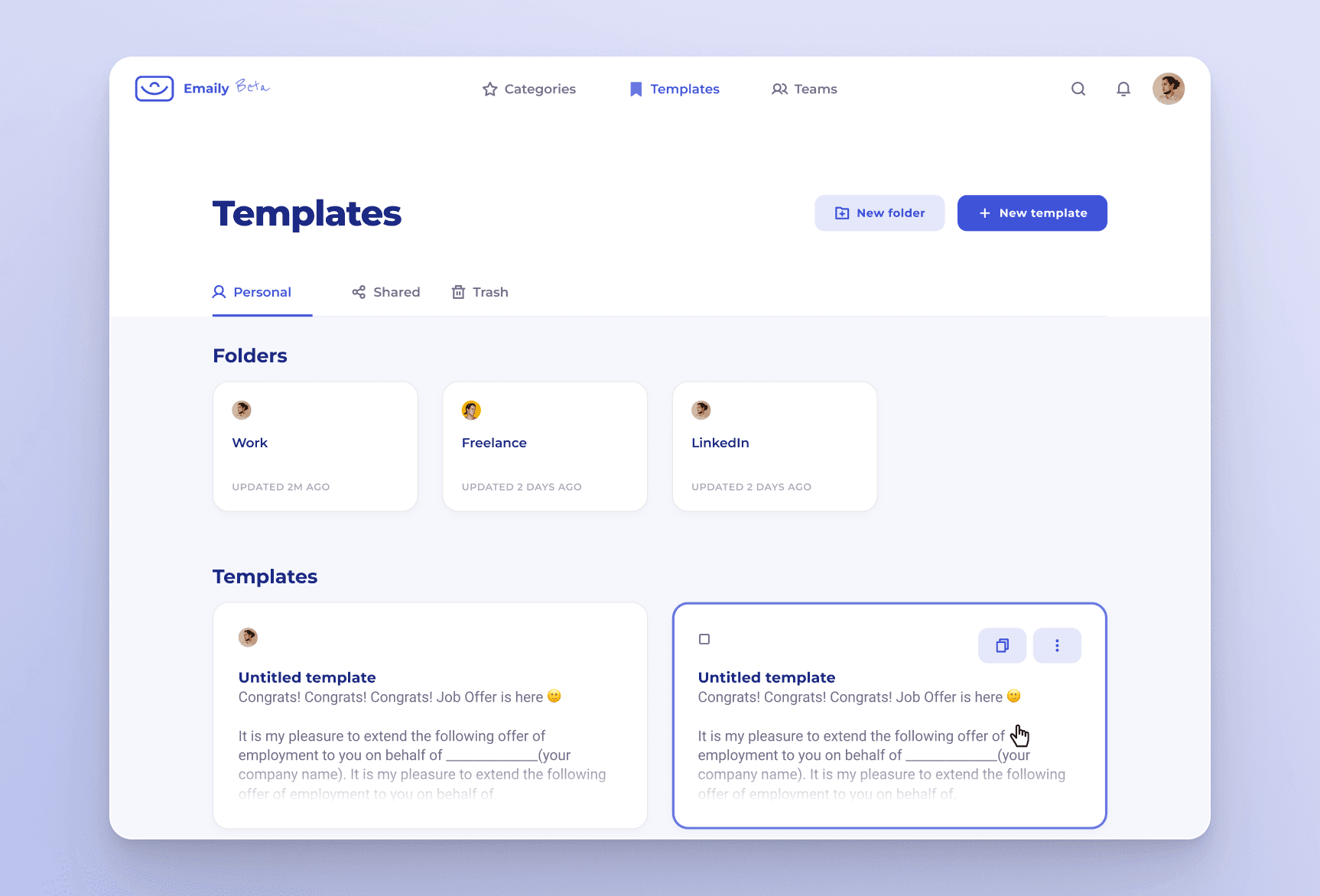
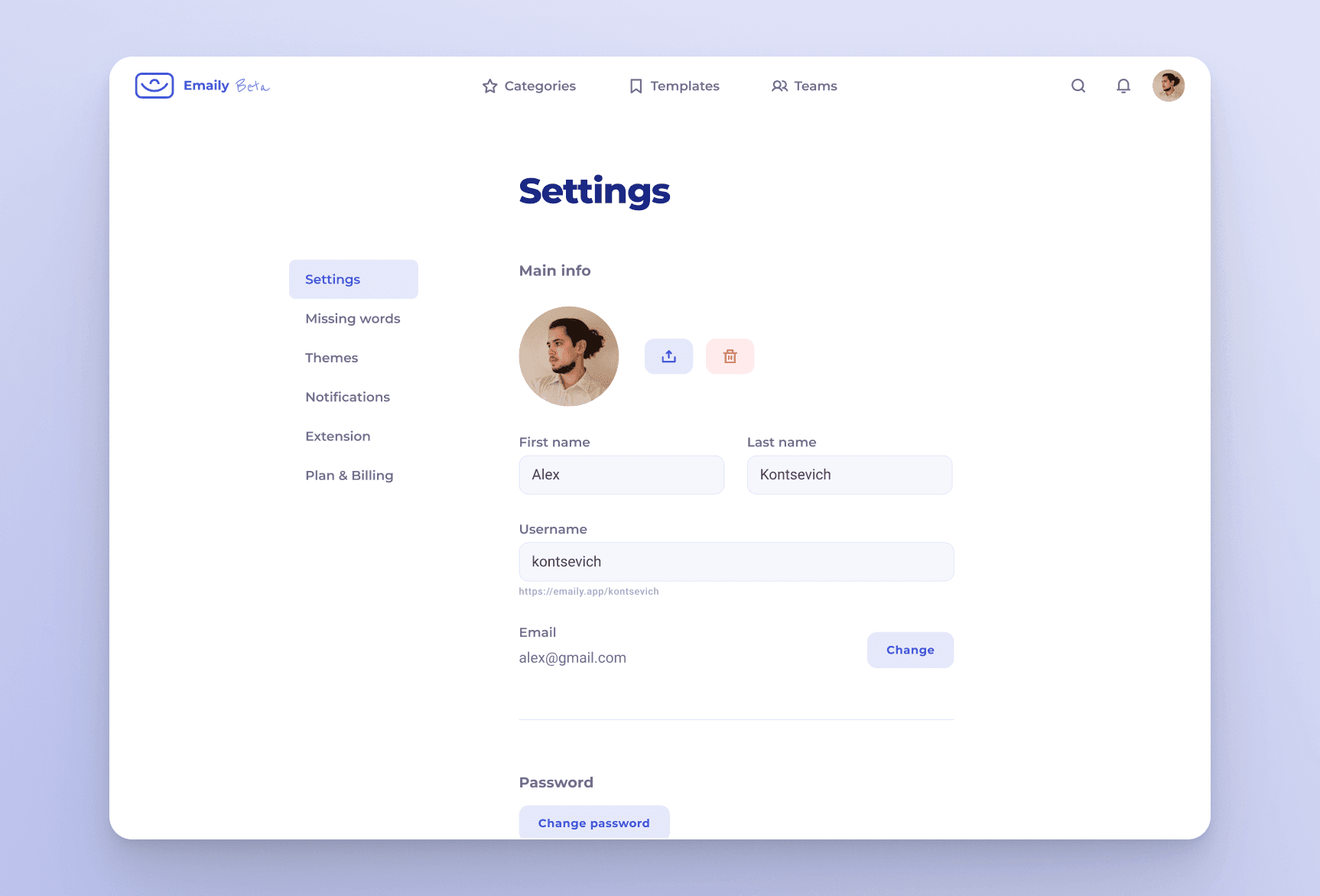
I created the interface of Emaily in Figma and made a fake video with UI animation, as if I myself clicked on it. I did all this in After Effects. At the same time, I was creating a landing page.
In April 2021, I posted all my work on Product Hunt. As a result, I received good feedback from people, gained 200 likes, and many people left their email for early access. Having such a proof-of-concept, I decided to develop this idea further.
I couldn't make the product I envisioned using No-Code applications like Bubble, so I needed developers. I convinced my frontend friend and his backend colleague that we should start a startup.
My friend, who is a writer, also joined us to help write the texts for the emails themselves.
Emaily didn't generate text like ChatGPT, but inserted ready-made text into your emails. You just had to fill in the blank spaces with your own data.
First Pitfall
According to the development plan, it was supposed to take 3-4 months to develop the entire application and I planned to have a beta release in the Q4 of 2021. The developers agreed to this, as the application looked very simple at first glance.
The summer went by and we were actively developing the product. The developers always wanted to write quality code, as we were doing it "for ourselves". And I let them do it, as it seemed logical to me.
Because of this, our development took a very long time. Instead of 3-4 months, we developed for 14 months.
Second Pitfall
During the release of the concept for Product Hunt, everyone loved the product. I showed it to different friends \ colleagues and everyone liked it.
Because of this, I thought that EVERYONE would use this product. Therefore, I didn't actively search for one perfect target audience that would pay for our product.
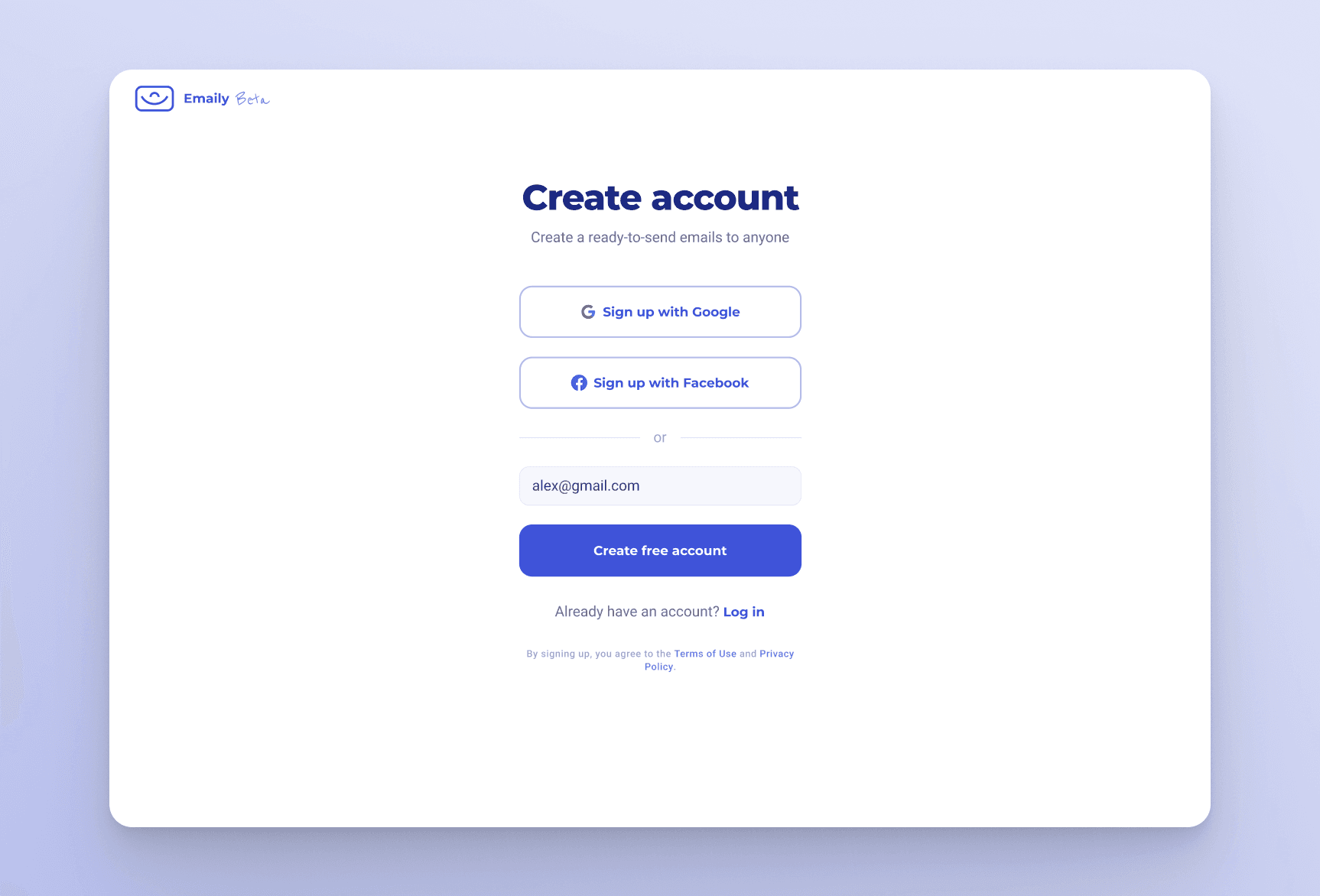
As a result, by the time of our release in June 2022, many people visited our website, and it was a success.
But because the product was tailored to everyone at once and didn't satisfy anyone individually, no one stayed for long. Retention was low.
Then I realized what the problem was and started making our product exclusively for Recruiters — because they write a lot of emails every day. But it was already too late.
Third Pitfall
We spent a year developing the application. During this time, the motivation of the team kept fluctuating like a rollercoaster. I tried to maintain motivation as much as I could.
But after the release, when we saw the great results of our work, nobody stayed long enough to use it, and our motivation was severely shaken.
We no longer had that strong enthusiasm in our eyes.
Our further development slowed down significantly. I tried to modify the application for a specific target audience, which took several more months for the team.
And then Chat-GPT was released publicly, and I realized that it was the end. Emaily could not compete with it in any way. In the end, we decided to close the product.
Okay, but what about the results?
It was a good experience that helped all of us to improve. I realized that I lacked knowledge in Product Management, analytics, and working with users.
I tried to fill these gaps over the last 12 months. Moreover, my experience helped my client, who had many similar challenges as I did during the Emaily times.
Creating a startup is not as easy as it seemed. Who knew?