Sr. Product Designer focused on craft, systems, and AI. Based in Wrocław, Poland 🇵🇱
About me 👋
I'm Alex. I design AI products people trust.
Currently at Adobe, on the Semrush Local team (joined via the Semrush acquisition in 2026).
8 years in product design, across B2B SaaS, B2C, and indie products.
How I work 🧩
Minimum lovable beats complete. With my PM I cut every feature down to the smallest version people will actually love, and ship that first. I once spent a couple of sprints on per-location controls almost nobody used. The hard part is knowing what to cut.
The design isn't finished at handoff. Before we build, I mark which events we need to track in BigQuery. After release I watch session replays, read the feedback, and write to users directly. One small modal I added when people turn a feature off has brought in 4,850 feedback messages in a year, and a lot of what we shipped next came straight from them. For me a design is done when the users, my gut feelings and the analytics tell it works.
I work with engineers, not above them. At grooming I explain what the feature is and why we build it, and I want engineers to question it. During the build I'll change things to make their work easier, as long as it doesn't hurt the UX. I help the team through development and QA. I don't just hand over the mockups and leave.
The prompt is part of the design surface. On AI features I own the prompt together with backend: tone, context, and token cost. If a designer never reads the model's output by hand, the UI is just decoration.
Trust is built in steps. When you give a model real authority, you start people on a lower-risk version of it first. Skip that step and the trust never builds. And when AI acts for a person, feeling human beats feeling fast. I slowed a model down on purpose, so it felt less robotic and people trusted it more.
I review for how it feels. Reviewing my own work or a teammate's, I look at how it feels to use before I check whether the spec is met. No process gives you taste.
Tools & practice 🧰
Figma every day. Framer for this portfolio. Claude Code, Claude chat, and Gemini every day. Built custom skills for design work and a couple of side projects I run on weekends.
BigQuery and Hotjar almost every day. Mixpanel before. Other tools change often. Something better shows up almost every week.
Coded sites by hand years ago: HTML, CSS, some vanilla JS. Don't build them now, but the understanding stuck. Earlier I also used After Effects and Protopie for UI animation and prototypes.
I like to read about the product strategy, founder books, growth, design. Mostly post-2022 books & articles. The AI shift made older product wisdom less useful.
Background 📚
I started as a web developer in Ukraine in 2016. Switched to product design in 2018.
5 years at Qubstudio (2018-2023), one of the top design agencies recognized by Clutch and Red Dot. Worked with 16 venture-backed startups, mostly Y Combinator and 500 Startups, with an average NPS of 9.2. Spent 1.5 years as Design Manager mentoring a team of 11. Led the Dribbble account and team for two years.
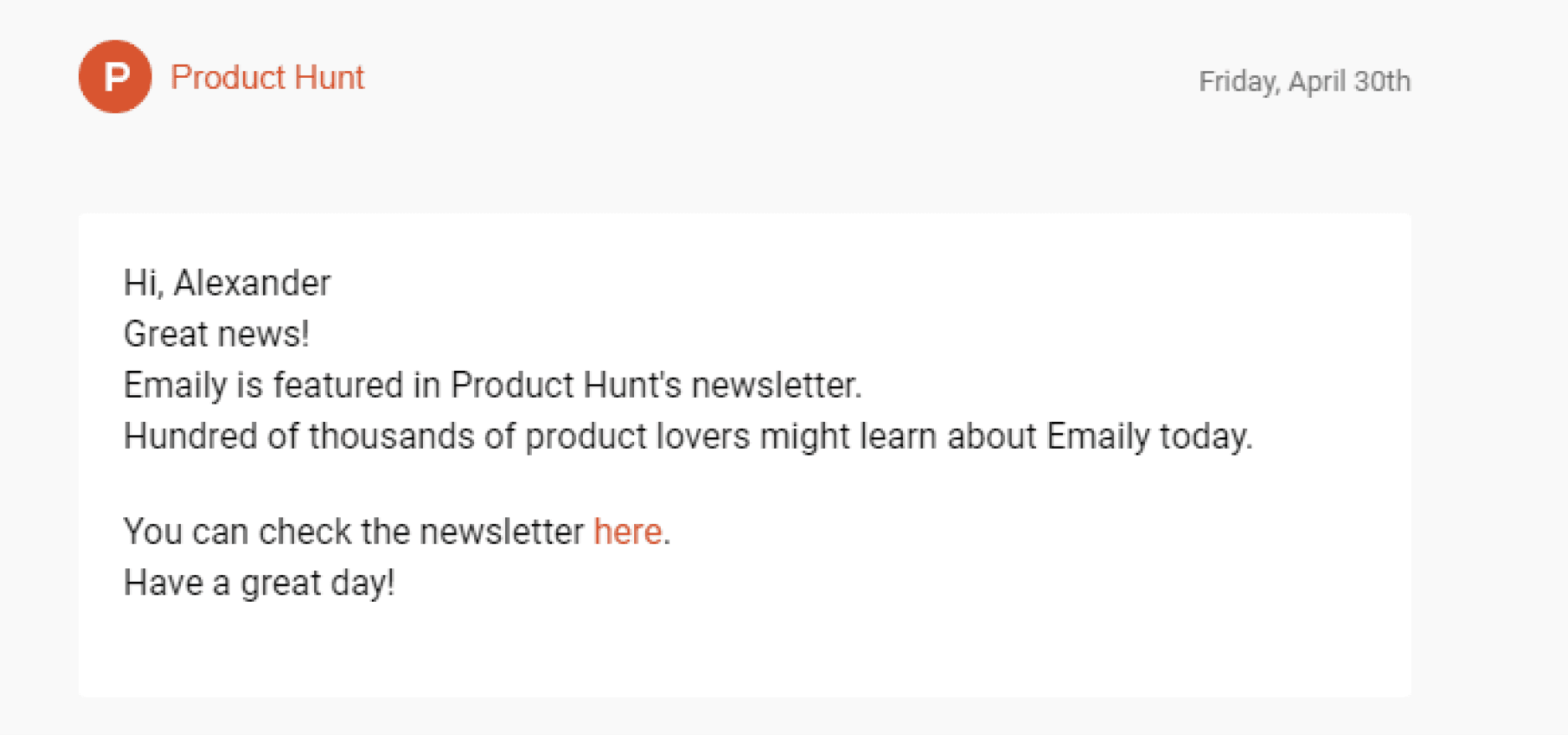
I founded Emaily in 2021. AI-assisted email writing tool. ChatGPT came out, and Emaily couldn't compete. I wrote the post-mortem here.
Joined Semrush in August 2023, now based in Wrocław, Poland. I design for the Local team: how businesses show up on Google Maps, and the AI on top of it.
My flagship is AI Replies, which drafts and sends replies to Google reviews. Half of weekly active users on Local now rely on it, reply rates climbed from 35% to 68%, and it became the foundation for the team's GBP AI Agent. Alongside it I created onboarding flow (time-to-value from 7–10 days to ~20 hours) and I'm now designing HIPAA-compliant AI Replies. Semrush was acquired by Adobe in 2026.
Wow, that’s so human 🤗
What I love:
🎮 Videogames (BG3, RDR2, Stalker 2, Dishonored)
🌁 Foggy weather
🚗 Long car trips
🎵 Music (from Slipknot to Snoop Dogg and beyond)
🏠 Staying-at-home
📖 Reading (books & newsletters)
🎧 Podcasts (Lenny, Leah Tharin, NotebookLM 😅)